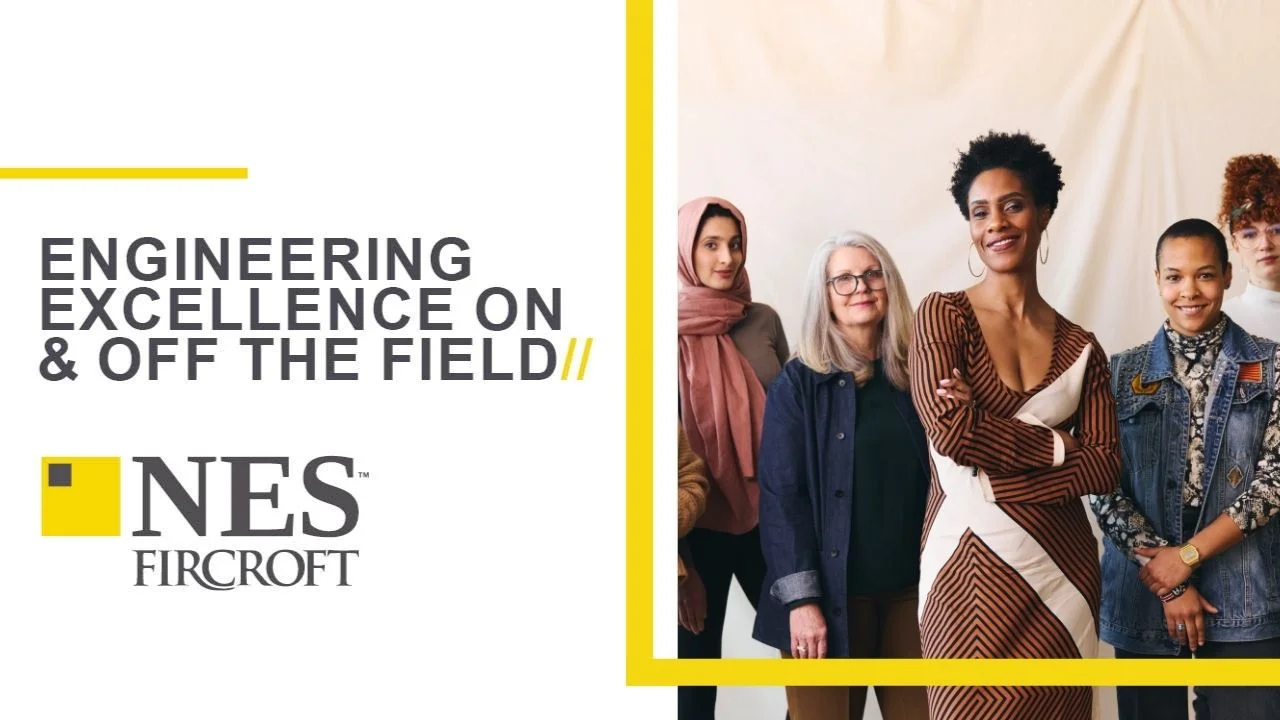
Engineering Excellence On and Off the Field: Reflections from Our IWD Panel
13 Mar, 20266:24Main insights: NES Fircroft’s International Women’s Day webinar brought together inspir...
Main insights:
- NES Fircroft’s International Women’s Day webinar brought together inspiring athletes and engineering leaders to explore what helps women to perform and grow in demanding environments.
- Panellists revealed that inclusion is built through everyday behaviours, real-world experiences of psychological safety, representation, sponsorship, and allyship as the foundations of belonging.
- The conversation highlighted that employers must look beyond policy and focus on culture, stressing the need for leaders to actively redesign workplaces so diverse technical talent can genuinely thrive.
For this year’s International Women’s Day (IWD), NES Fircroft hosted an honest and powerful conversation on what it really takes to perform, progress and lead in male-dominated environments where women commonly remain underrepresented. Our panel brought together elite athletes and leaders from sport, energy, engineering, and HR to talk honestly about how diversity, equity, and inclusion show up in day-to-day working life. They spoke about performance under pressure and, just as importantly, about what shifts inclusion from good intentions and policies into lived experience.
The discussion revealed something powerful that inclusion is not abstract, but built (or broken) through everyday behaviours, decisions, and systems.
How women build confidence in high-pressure environments
Across sport and industry, several of our panellists talked openly about entering spaces where their credibility was questioned before their capability was even recognised.
Former England footballer Jess Clarke spoke powerfully about mindset as a performance tool:
“We all need friction in order to expand. It’s about embracing moments of discomfort so we can grow.”
Rather than internalising doubt, Jess described the importance of holding liberating beliefs instead of limiting ones, and about knowing you belong even when the system around you suggests otherwise.
Former England rugby player Jodie Ounsley echoed that message, the first deaf woman to represent England, who explained that her resilience was built through openness:
“The moment I spoke up and explained what I needed, everything changed. People want to help – they just need to understand.”
Their experiences reinforced a central theme of the discussion: belonging often begins with psychological safety, not policies.
Being “the only” and the cost of resilience
For Ola Balbaa, Wells Engineer at bp, being “the only” was not theoretical — it was daily life:
“I’ve been the only woman offshore with 120 men. The opportunity wasn’t enough -credibility was the real test.”
Ola described being openly questioned about whether she belonged, and the additional emotional and professional labour required simply to be seen as capable. Yet one moment stood out:
“After months of silence, a colleague asked for a photo — he wanted to show his daughter that she could be like me.”
It was a reminder that representation isn’t symbolic; it is transformative, particularly for women in engineering who are often navigating environments not designed for them and where the progress feels slow.
Role models, sponsorship and the power of belief
While visibility matters, the panel agreed that sponsorship is what pushed their careers.
Ola highlighted the difference a senior female sponsor made to her career:
“She didn’t just support me, she trusted me. That belief changed how I saw myself.”
Jess echoed this, stressing that role models aren’t just those in the spotlight:
“Some of the most powerful role models are the ones changing perspectives quietly, every day.”
Collectively, the panel reinforced that talent progresses fastest when belief is actively transferred, not passively hoped for.
Inclusion isn’t facilities, it’s culture
The panel acknowledged the progress made, including better facilities, PPE, and changing rooms, but all viewed this as the baseline, not the goal.
“We shouldn’t be congratulating ourselves for the bare minimum,” Ola said. “Facilities should be normal. Culture is the real work.”
From parental leave through to offshore living conditions, there’s still a clear gap between policy and what people actually experience at work.
Chris Drake, Country HR Manager at Hitachi Energy, reinforced that intent alone is insufficient:
“Change doesn’t happen because policies exist – it happens when leaders role‑model, challenge norms and redesign how work is done.”
Allyship that actually works
Allyship came up repeatedly throughout the discussion, not as a label, but as something demonstrated through action.
Chris was clear:
“It’s not just about women advocating for women. Allies need to use their voice – especially in rooms where others aren’t present.”
Whether it’s men taking shared parental leave or managers creating space for different perspectives, real allyship is visible, consistent and enacted by those with influence.
Belonging is the outcome, not the initiative
When the panel spoke about what helped them feel a sense of belonging, their answers followed a similar pattern. It wasn’t messaging or formal strategies, but being invested in, trusted, respected and treated seriously in their work.
As Jodie put it:
“Belonging came from being treated as an athlete — not a ‘female’ athlete.”
What this means for employers — and for us
At NES Fircroft, the conversation reinforced what we see every day across energy, infrastructure and the built environment. The importance of inclusion cannot be overstated:
- Inclusion is a performance issue
- Belonging is a retention strategy
- Diversity without voice is not progress
As a specialised engineering and technical recruitment agency, our work extends beyond placements as we support clients in building future-ready, high-performing teams with intentional cultures and genuine opportunities for diverse talent.
Ola reminded us:
“It’s not about counting seats at the table. It’s about making sure every voice is heard once people sit down.”
And that is where real excellence – on and off the field – is engineered!
But the conversation doesn’t end with International Women’s Day. Contact us today to explore how we can support you in creating inclusive cultures and diverse technical teams.