Data Centers: Hiring Trends and Skills Demand
12 Feb, 2026

Key Takeaways: Nuclear Small Modular Reactors (SMRs) are attracting wide interest in t...

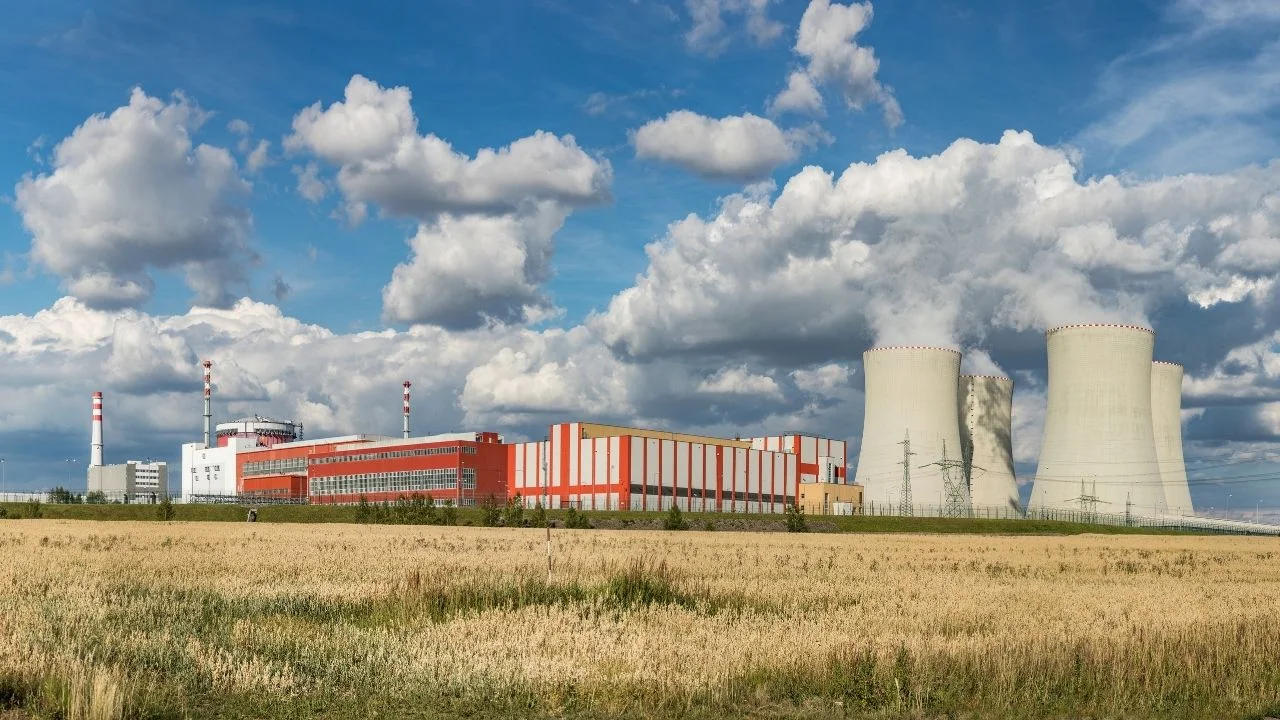
Nuclear Small Modular Reactors (SMRs) are increasingly emerging as a focus in the US and Canada for future electricity generation.
Nuclear energy has long been part of the power mix in the US and Canada, offering a stable, low-carbon baseload power. But the prospect of conventional, gigawatt-scale nuclear plants has become increasingly challenging. This is because large reactors involve massive upfront capital costs, long build times, complex regulatory processes, and public sensitivity to both siting and waste management.
Meanwhile, demand for electricity - driven by industrial growth, electrification, and expanding digital infrastructure - continues to climb. In this context, SMRs address many of the limitations of conventional plants while aligning better with modern energy demands.
Here, we look at the development of nuclear SMRs in the US and Canada, and what this means for nuclear recruitment.
There are several reasons for growing interest in nuclear SMRs across the US and Canada:
Globally, the pipeline for SMR projects has grown markedly. According to a report by Wood Mackenzie, the global SMR project pipeline reached 47 GW by Q1 2025 - up by 14 GW since the previous quarter. It also highlights that there is 2.5 GW currently under construction or in development, with 1.2 GW of activity in Canada.
By 2024, the US had announced nearly 4 GW in SMR projects in addition to almost 3 GW in early development or pre-development stages.
In Canada, a landmark is the Darlington New Nuclear Project (DNNP) site in Ontario. In April 2025, the Canadian Nuclear Safety Commission (CNSC) issued a construction license to Ontario Power Generation (OPG) to construct the first 300 MW reactor.
The full four-reactor project is expected to provide power to more than 1 million homes, deliver significant economic benefits, create over 18,000 jobs during construction, and sustain many more during long-term operations.
This makes Darlington the first commercial-scale SMR project in a G7 nation and a possible model for further deployments across Canada and beyond.
In the US, several operators and reactor designers are advancing SMR plans. For example, both the Tennessee Valley Authority and Holtec will each receive up to US$400 million to support the development of SMRs.
Meanwhile, demand signals are changing: Wood Mackenzie reports that SMRs are increasingly viewed by Google, Amazon, and others as a viable source of electricity for power-hungry data centers and AI - areas where traditional renewables or existing grid capacity may struggle to keep up.
SMRs are now not just viewed as utility-scale power sources, but as part of a broader shift toward clean, reliable energy for industrial sectors. A recent study projected that SMRs could support decarbonization of at least 11 major industrial sectors in North America and Europe, aiming for as much as 700 GW of SMR capacity by 2050.
This rising interest from industry - including data centers, manufacturing, and other large-scale energy users - is helping to drive contract-level activity, financing, and a growing sense that SMRs will form a key piece of North America’s future energy infrastructure.

There is growing evidence that nuclear SMRs will form a big part of the future energy mix in the US and Canada. With major projects underway in Canada and strong momentum in the US, SMRs are transitioning from concept to reality.
For businesses, this wave of new projects brings the challenge that, at present, there are far more jobs than there are qualified nuclear candidates available. Demand is increasing for nuclear engineers, commissioning engineers, project managers, regulatory and safety experts, operations staff, supply chain and manufacturing specialists, maintenance crews, and more.
At NES Fircroft, our long-standing experience in nuclear recruitment across North America and Canada, combined with our expertise in related sectors such as data center recruitment, uniquely positions us to support clients in building their required workforces. We understand the niche skillsets and long-term workforce planning essential for SMR builds, ensuring you secure the right talent early.
If you’re expanding an existing workforce or building a team from the ground up, get in touch with our specialist team today. Or if you’re candidate interested in exploring how your background might fit within SMR projects in Canada or the US, browse our latest nuclear engineering jobs here.

Small modular reactors (SMRs) are nuclear reactors designed to typically produce up to 300 MW of power, built from factory-fabricated modules and assembled on-site.
Traditional nuclear plants generally produce 1 GW or more per reactor, and require large construction sites, high upfront capital investment, and long build times. SMRs, by contrast, are smaller and less complex, enabling incremental deployment and lower capital costs. However, because SMRs lack economies of scale, their cost per MW may be higher.
There is a rapidly growing pipeline. The global SMR pipeline reached 47 GW by Q1 2025, with the US and Canada constituting some of the largest prospective markets.
In Canada, construction of the first commercial-scale SMR at the Darlington New Nuclear Project began in 2025 at a cost of US$15.1 billion. The project plans up to four 300 MW units, with the first unit licensed and under construction.
In the US, several operators and vendors are advancing SMR plans, including projects at former conventional nuclear sites, targeting initial deployments in the late 2020s to 2030s.
Currently, no large-scale SMR nuclear plants are operating in the US. Some SMRs have regulatory design approval, but deployment is still some time away.
Modern data centers, heavy industry, and electrification require large, reliable baseload power. SMRs offer clean, consistent, on-demand power, with modular capacity that can scale as demand grows.
The growth in SMR deployment signals a major expansion of jobs in nuclear engineering, construction, operations, regulatory compliance, safety, and project management. For employers, this means increasing pressure on an already limited talent pool, and for candidates, it represents a significant opportunity: as SMR projects move from planning through to operation, demand is expected to rise for nuclear technicians, project engineers, radiation safety officers, regulatory engineers, and specialists involved in both commissioning and decommissioning activities.