From Visas to Workforce Planning: Delivering Renewable Projects in the Middle East
16 Sept, 202614:00Gigawatt-scale solar, wind, battery storage and green hydrogen developments are advancing ac...

Gigawatt-scale solar, wind, battery storage and green hydrogen developments are advancing across Saudi Arabia, the UAE, Oman and neighbouring markets, creating intense competition for specialist talent. While sourcing skilled professionals is a major challenge in itself, workforce mobilisation arises as an equally complex hurdle. Visa requirements, labour regulations, nationalisation policies and entity set-up timelines can affect project schedules. Through early workforce planning, access to local and international talent pools, and solutions such as Employer of Record (EOR), developers can compliantly mobilise teams for projects whose phases span multiple regions.
Main Insights:
- Renewable energy capacity in the Middle East is forecast to grow from 54.85 GW in 2026 to 102.40 GW by 2031.
- MENA solar and wind capacity could reach 404 GW by 2035, up from 49 GW today.
- Saudi Arabia has 82 renewable energy projects in delivery pipelines, creating ongoing workforce deployment requirements.
- Cross-border mobilisation planning is often required long before site activity begins due to visa, employment and compliance requirements.
Why Renewable Energy Expansion Is Creating New Workforce Challenges
Renewable projects in the Middle East are at various stages of development, with growing interest across subsectors such as solar, battery storage, wind, green hydrogen, and grid infrastructure. Renewable energy capacity is expected to rise from 54.85 GW in 2026 to 102.40 GW by 2031, illustrating the volume of work planned across the market. When separated into sectors, forecasted cumulative solar and wind capacity in the MENA could reach 404GW by 2035, compared to 49 GW today.
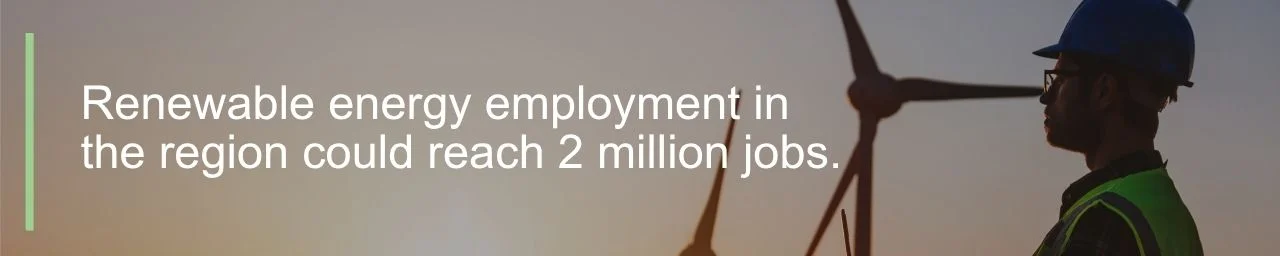
IRENA projects that renewable energy employment in the region could reach 2 million jobs, compared with 542,000 in 2017. These numbers indicate positive long-term employment opportunities, but the question is not always about where to find expertise; it’s about how to ensure personnel are engaged in compliance and arrive when needed.
Workforce readiness deserves the same attention as long-lead equipment. A delayed hire can leave a work front unattended, or a missed work authorisation or visa approval can postpone a site mobilisation.
This is why renewable energy recruitment and workforce mobilisation should be considered together. A candidate might be available and suitably qualified but still need the correct employment authorisation before they can begin work.

What Does the Middle East's Project Pipeline Mean for Workforce Planning?
Saudi Arabia is a clear illustration of the workforce requirements behind the region’s energy investment, with 82 tracked renewable energy projects currently at varying stages of delivery.
The NEOM Green Hydrogen Project, a joint venture between NEOM, Air Products, and ACWA Power, includes around 4 GW of renewable generation through solar, wind, and storage, with 80% overall project progress reported at the beginning of the first quarter of 2025. Today, construction is in the final stages of completion, and commissioning started with energisation. First product is expected in 2027.
Projects of this profile place pressure on workforce planning because specialist personnel are often required at multiple locations at the same time. Many organisations already have access to these skills through existing employees, contractors, or international talent networks. The challenge is to mobilise and manage those workers compliantly while keeping project schedules intact.
Dii Desert Energy’s MENA Energy Outlook highlights that the regional renewable project pipeline has reached 202 GW. Solar PV accounts for 130 GW of that figure. The report tracks more than 800 utility-scale renewable assets exceeding 5 MW, including operational facilities, projects under construction and developments in planning stages.
To put it into perspective, here’s a table of project activity that will require a significant workforce:
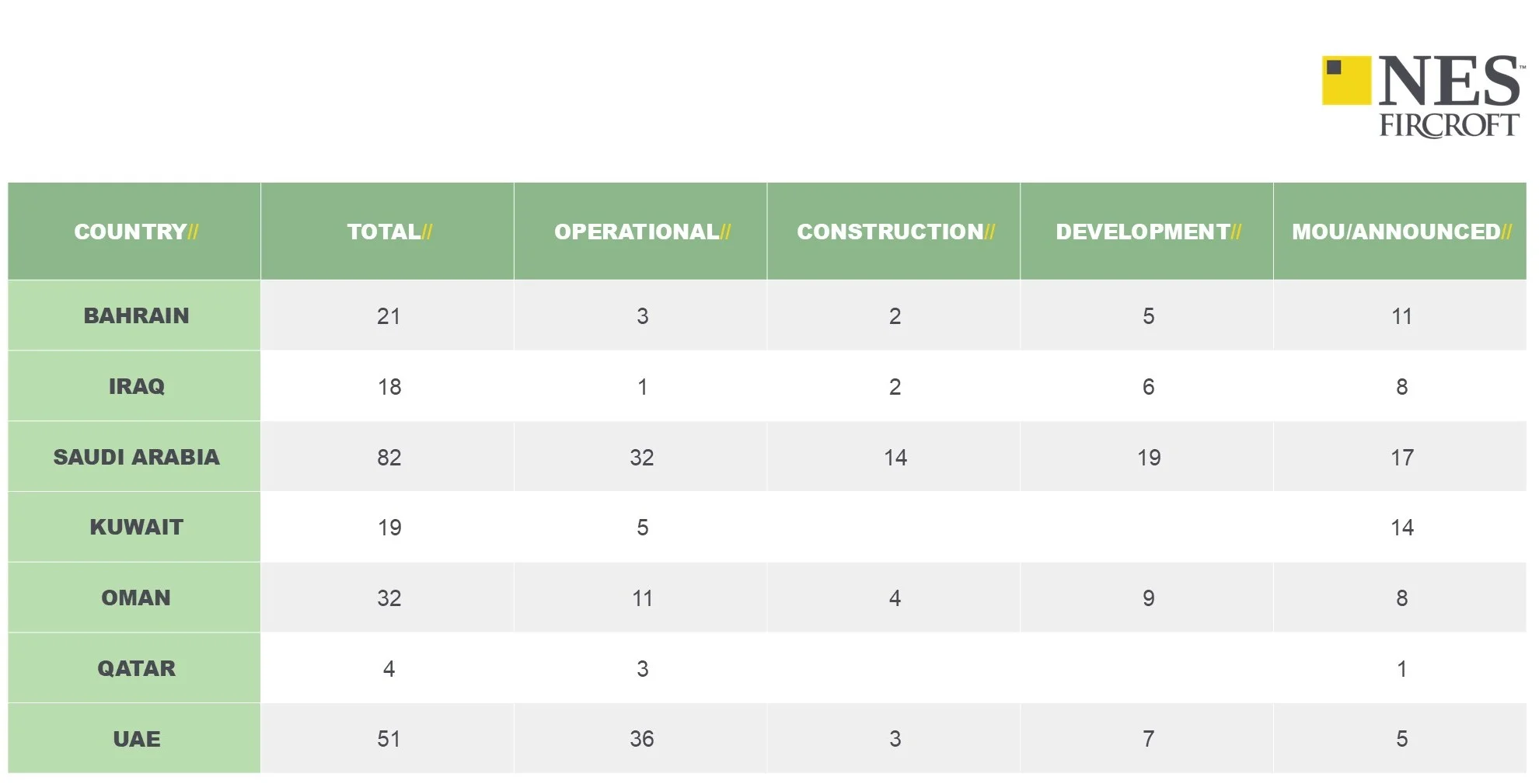
(Source: Dii Desert Energy’s MENA Energy Outlook 2026. Table covers projects across solar PV, solar-thermal (CSP), and wind. It doesn’t include hydrogen.)
Following Saudi Arabia’s leadership, the UAE is also building on its position as a mature renewable energy market, developing utility-scale solar parks such as Mohammad bin Rashid Al Maktoum and Al Dhafra. And Oman is carrying out solar, wind, and hydrogen projects, including large developments around Duqm and Dhofar.
All these projects require workers and different stages of the programme, making compliant and efficient workforce mobilisation essential to minimise project delays. Construction managers, commissioning engineers, HSE specialists and technical advisors may need to move between countries, operating companies or project packages. Mobilisation arrangements can directly affect schedules, so it’s fundamental to have a clear framework and hiring teams well-versed in the Middle East’s labour requirements.
Visas and Employment Rules Can Affect Mobilisation
Workers can’t simply arrive and start work on a project because their employer needs them on-site. Project schedules depend on obtaining visas, work permits, employment approvals, and clearances within strict timelines.
Renewable energy projects in the Middle East generally rely on a blend of locally based professionals and international expertise, but immigration and employment arrangements vary across the Gulf. While many countries have streamlined parts of their immigration systems, requirements still differ between jurisdictions. The correct route depends on factors such as nationality, job type, contract type, project duration, the employer’s local structure, and applicable localisation requirements.
In Saudi Arabia, expatriate employment involves Ministry approval, a work visa process, and, for long-term employment, residency formalities. Saudi workforce and immigration processes are also subject skill and profession classification requirements. The Ministry of Human Resources and Social Development lists education qualifications, professional experience, professional skills, remuneration, and age as the assessment criteria for skill categorisation. This places extra importance on accurate job descriptions, relevant credentials and coherent compensation packages when preparing an expat hire.
The UAE requires employers to secure a work permit through the Ministry of Human Resources and Emiratisation, with the occupation expected to fit the organisation’s licensed activity. The official UAE government platform lists 13 work permit types and identifies employer compliance, valid licensing, and role-specific qualifications as part of the issuance conditions. The process then links employment authorisation with residence formalities for overseas hires.
For further country-specific guidance, read more in our guides on: How to Get a Visa in the UAE and How to Get a Visa in Qatar
Saudi Focus: Choosing the Right Work Route
Saudi Arabia deserves particular attention due to the size of its renewable energy programme and the number of national and international professionals who may need to be mobilised.
- A business visa is suited to meetings, consultations, site visits, and short-term business activities. It generally doesn’t permit formal employment activities. Employers should confirm the permitted activity before arranging travel for technical personnel.
- A temporary work visa is designed for short-term project requirements. It’s a route for assignments of up to 180 days that doesn’t lead to an iqama, while long-term employment follows the employment visa route. The appropriate option depends on the individual’s activities, role, and assignment period.
- An employment visa is intended for long-term stays. Following the relevant approvals and entry process, the employee completes the steps required to obtain an iqama, Saudi Arabia’s residency permit for foreign workers. The process may require employment documentation, qualifications, medical examinations, and, where applicable, police clearance documentation.
- Saudi Arabia also provides electronic routes for employers to request permanent and temporary work visas through Qiwa.
Note: Immigration and labour requirements are subject to change. You should always verify current eligibility criteria and permitted activities before mobilisation.
When Does Mobilisation Become Part of Project Delivery?
Imagine you have identified an experienced commissioning engineer in Europe. The candidate is available, the salary has been agreed, and the project manager expects them to start within a few weeks. The recruitment decision might be complete, but mobilisation isn’t.
There may be employment documentation to prepare, work authorisation to secure, qualifications to verify and travel arrangements to coordinate. If the individual is replacing someone who’s left unexpectedly, the time available to complete those steps may be even shorter.
This is why mobilisation should be treated as part of project planning, not as an administrative task that begins after an offer has been accepted.
How Can Workforce Forecasting Improve Mobilisation Planning?
To reduce mobilisation risks, you should map workforce requirements against project milestones and identify where local hiring can meet demand and where international expertise is required. This should happen well before the final mobilisation window, particularly for positions requiring specialist credentials or experience on comparable projects.
Early workforce forecasting helps build visibility around recruitment requirements, mobilisation timelines, visa processing requirements, nationalisation obligations and the balance between contractor and permanent hiring.
With stronger visibility, you have more time to choose the most appropriate engagement route and avoid last-minute mobilisation challenges.
Balancing Local And International Talent
Nationalisation programmes throughout the Gulf encourage local workforce participation and skills development. And at the same time, many renewable energy projects require highly specialised expertise that may need to be sourced internationally.
Early engagement with local talent pools provides access to engineers and project-support professionals who understand local working conditions. Certain disciplines associated with green hydrogen, battery storage, commissioning and major transmission infrastructure may still require expertise drawn from international markets. The objective, though, is to create a practical blend of local capability and specialist global expertise, with each person engaged through an appropriate employment route.
NES Fircroft’s renewable energy recruitment services in the Middle East cover recruitment, global mobility, and contractor management for a range of renewables work. We provide support with in-country orientation, accommodation, bank accounts, medical cover and insurance for contractors you want to deploy.
How EOR Can Help Keep Your Renewables Project on Track
One of the most effective solutions for project developers entering new markets is an Employer of Record (EOR) model. An EOR solution in the Middle East allows you to employ and mobilise personnel in-country without establishing your own legal entity before project activities begin.
This can be valuable when you need to enter a market for a project-specific requirement or need to employ professionals across more than one GCC country. The EOR assumes responsibility for local employment, payroll and workforce administration, enabling your project team to focus on delivery. It also provides clarity around employment arrangements when your workforce includes international hires, local nationals and contractors.

Case Study: Mobilising Personnel for a Major Green Hydrogen Project in Saudi Arabia
A leading industrial gas company engaged NES Fircroft to support workforce mobilisation for one of the world's largest green hydrogen developments in Saudi Arabia. The project's scale and remote location created complex workforce planning and deployment requirements throughout construction.
We delivered a complete mobilisation solution covering visa processing, payroll administration and travel coordination. Our team managed workforce documentation in employees' home countries and within Saudi Arabia, while dedicated account managers provided ongoing support throughout the project lifecycle.
Over 18 months, NES Fircroft supported more than 120 workforce mobilisations and recruited over 40% of the project's workforce. By coordinating mobilisation activities and maintaining close oversight of deployment requirements, we helped reduce the time required to hire and mobilise personnel to the site.
Partner With a Renewable Energy Workforce Specialist in the Middle East
NES Fircroft has supported workforce expansion in the Middle East since 1999 and operates legally owned offices in Abu Dhabi, Dubai, Iraq, Saudi Arabia, Kuwait, Oman, and Qatar. We have more than five decades of engineering workforce experience with dedicated renewables capability across the region. Our local teams can help you overcome workforce mobilisation challenges through technical recruitment, contractor management, international mobilisation, and EOR services.
Contact us today to discuss your next hiring requirements.
People also ask:
What are the most effective talent mobility strategies for renewable energy projects in the Middle East?
Successful talent mobility strategies combine early workforce planning, access to global and local talent pools, compliance with localisation policies such as Saudisation and Emiratisation, and structured mobilisation support. Many renewable energy employers also use an Employer of Record (EOR). Read more here for insights.
What are the benefits of using an Employer of Record (EOR) in the Middle East?
An EOR enables companies to hire and mobilise workers in-country without establishing a local legal entity. Benefits include faster market entry, streamlined payroll and HR administration, reduced compliance risk, visa and work permit support, and greater workforce flexibility across multiple Middle Eastern markets. Learn more in our guide.