What Does a Data Centre Engineer Do? A Day in the Life
17 Nov, 20268:45A data centre engineer designs, tests, commissions and maintains the systems a data centre r...


A data centre engineer designs, tests, commissions and maintains the systems a data centre relies on, from power and cooling to the controls that monitor them, so the facility runs reliably 24/7. If you’re thinking about a career in data centres, the job title is only a starting point. What will you actually be responsible for? Electrical, mechanical, controls and commissioning engineers all work in data centres, but they do very different jobs. This guide explains what each role involves and what you need to get started.
What does a typical day look like for a data centre engineer?
There’s no universal timetable. Planned work, an unexpected reading or a conversation with another specialist can change your day. That said, many days start in a similar way. You’ll review overnight alerts from building management systems (BMS) or electrical power monitoring systems (EPMS), patrol critical work zones and coordinate with operations and maintenance teams to confirm scheduled tasks such as tests, replacements and updates to control systems.
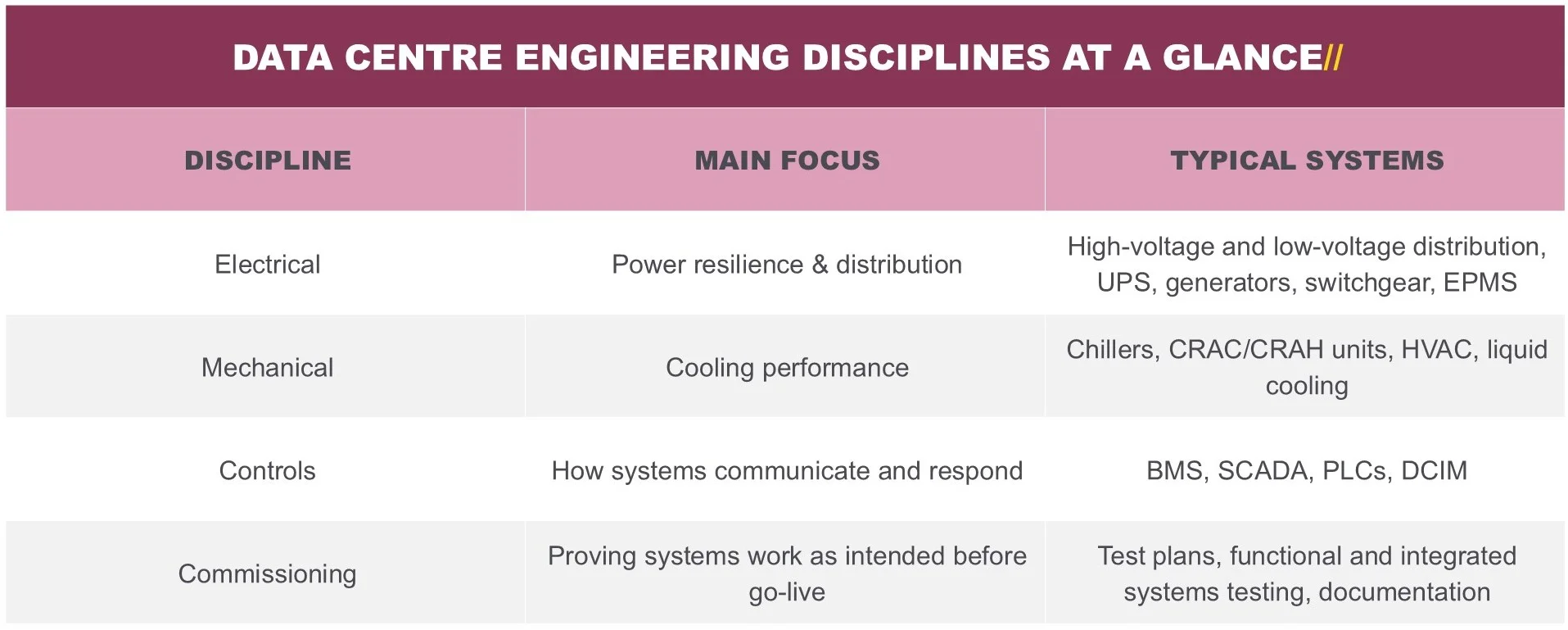
From there, the day depends on your discipline. You could be meeting project teams or contractors working on expansions, retrofits or commissioning activities, or analysing real-time energy usage and cooling efficiency, comparing performance against benchmarks and adjusting accordingly. The examples below show how responsibilities differ across disciplines.
[In this video, we explain what skills data centre engineers need, which tools they use, the jobs available in data centres and what an average day looks like on site.]
Electrical engineering: working with power systems
As an electrical engineer, you focus on the power that keeps a data centre running. You’ll review the status of equipment, check it against what it’s meant to do and work through any issues with colleagues. Typical equipment includes UPS systems, generators, switchgear and power distribution units.
Mechanical engineering: understanding cooling performance
As a mechanical engineer, your focus is cooling performance. You’ll review how cooling equipment is performing, look into anything that seems unusual and agree with colleagues whether it’s a local issue or something that needs a wider discussion. Cooling equipment can include chillers, CRAC and CRAH units and, increasingly, liquid cooling.
Controls engineering: investigating system responses
As a controls engineer, you look at how systems communicate and respond. An alarm or unexpected reading might lead you to examine what the system is reporting, whether that response makes sense and what else a proposed change could affect. You’ll often discuss your findings with electrical, mechanical and operational colleagues.
Commissioning: proving readiness before go-live
As a commissioning engineer, your focus is on establishing whether installed systems work as intended. You may review a test plan, witness a test, record the outcome and follow up on any result that needs attention. This can include functional performance tests and integrated systems testing, where the whole facility is tested together. If a test doesn’t produce the expected result, the question becomes what needs to be investigated before the work can progress. Documentation is part of the job too, because the team taking responsibility for the site needs a clear account of what has been tested, what the results show and what remains unresolved.
Curious about what it’s like to be a data centre commissioning engineer? Watch our video below.
[In this video, we explain why engineers deliberately try to break a data centre before it goes live, what happens during commissioning, and the tests carried out to prove a site is ready.]
How does the work change once a site goes live?
Before go-live, the focus is on readiness. You’ll coordinate tests, review whether the results support the intended operation and follow up on anything still unresolved.
Once a site is live, the focus shifts to ongoing performance. You may investigate an unexpected result or consider how planned work could affect other systems, knowing the facility is already operating.
This distinction can help you judge which opportunity suits you. If you enjoy bringing new systems into service, a commissioning role may appeal more. If you prefer investigating issues and improving performance at an operational site, a live operations or critical facilities role may suit you better.
What skills and qualifications do you need to become a data centre engineer?
There is no single qualification for every data centre engineering role. Requirements depend on the discipline, the employer and the level of responsibility, so check each job description to see what’s expected. Many engineers start with an electrical or mechanical engineering degree or an apprenticeship, while others move across from sectors such as power, utilities, or oil and gas.
Core skills you’ll need
The core skills you’ll need fall into four areas.
- Electrical and mechanical systems. This could include high-voltage distribution, UPS systems, diesel generators, HVAC, CRAC units and even liquid cooling.
- Automation and controls. You’ll need to understand Building Management Systems (BMS), Electrical Power Monitoring Systems (EPMS), SCADA integration and remote diagnostics. Knowledge of communication protocols such as BACnet, Modbus, SNMP, and MQTT is often asked for.
- Grid strategy and energy optimisation. This ranges from designing on-site generation such as battery energy storage (BESS), fuel cells and CHP units to working with utilities to manage grid interface and redundancy.
- Commissioning and reliability engineering. From supporting Tier III and Tier IV certification processes to arc-flash safety and load testing, where reliability is everything.
You’ll also need strong fault-finding, documentation and communication skills, because you’ll often explain technical findings to colleagues in other disciplines.
Tools you’ll work with
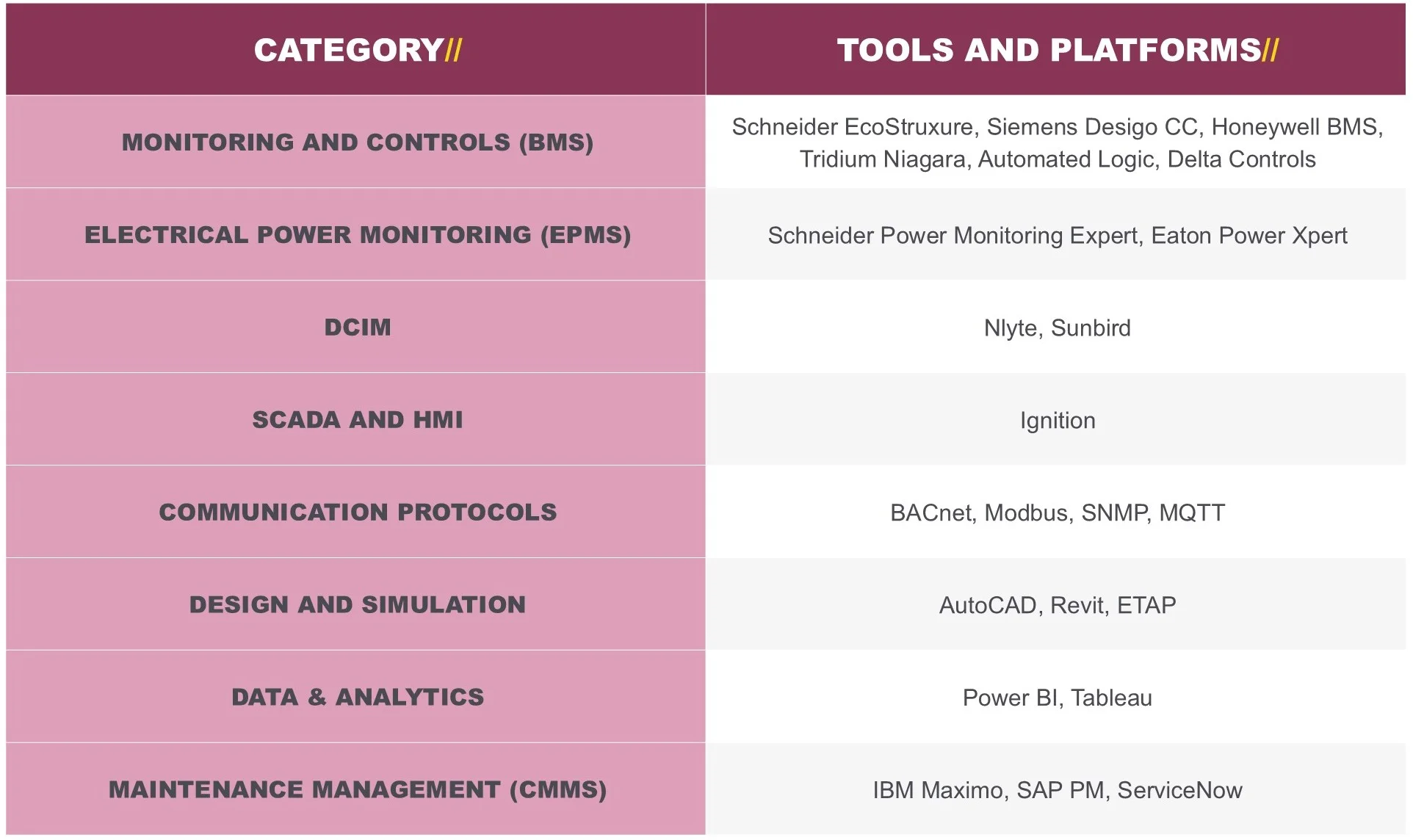
You’ll be working with design software, monitoring platforms and analytics tools. The table below shows examples of the platforms you may encounter as a data centre engineer.
What jobs and career paths are available in data centres?
Opportunities can include data centre technician, electrical engineer, mechanical engineer, controls engineer, commissioning engineer and operational roles. The right path depends on your existing skills and the kind of work you want to do.
A technician role can offer hands-on experience with site equipment and procedures. If you’re an experienced engineer from power, utilities, oil and gas or another sector, parts of your expertise may transfer to a specialist data centre role. Transferable experience doesn’t mean identical experience, so check what each role involves before you apply.
If you are exploring a move, ask which systems you would support and what training or qualifications the employer expects.
Ready to start your data centre engineering career?
Data centre engineering offers varied, technically challenging work, and it’s relevant to employers around the world. If you enjoy complex systems and want your work to have a real impact, it could be the right fit for you.
At NES, we partner with some of the biggest companies across the globe. Whether you’re looking for your first role in a data centre or moving across from another engineering sector, we can support your career journey. Browse our latest job opportunities or contact us today to learn more about our data centre recruitment services.