Why Are US Data Centers Turning to Nuclear Power, and What Does it Mean for Recruitment?
23 Jul, 202611:09US data centers are looking at utilizing nuclear as a source of continuous, carbon-free base...

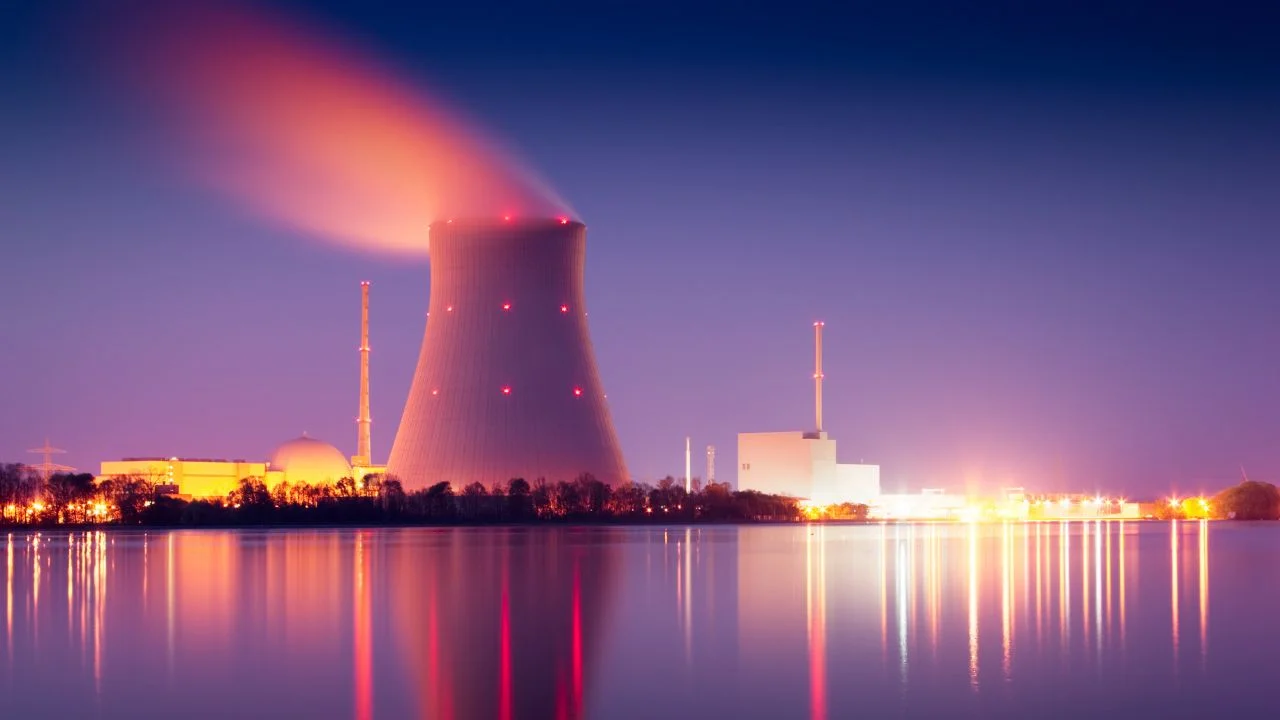
US data centers are looking at utilizing nuclear as a source of continuous, carbon-free baseload power required for massive AI workloads, but growing adoption is intensifying competition for a shrinking pool of specialized engineering and construction talent, creating a recruitment challenge for both industries.
Key Takeaways:
- AI is outpacing the grid. US data center power consumption could more than double by 2028, but interconnection delays mean that supply can’t keep up.
- Nuclear is re-emerging as a reliable source of baseload power. Data centers need continuous baseload power that renewables alone can’t guarantee, making nuclear PPAs and SMRs increasingly attractive.
- Every major hyperscaler has now signed a nuclear deal. Meta, Microsoft, Google, Amazon, and Vantage have all committed to reactor restarts, SMR investment, or long-term PPAs.
- A skills gap threatens the build-out. Nuclear and data center construction now compete for the same shrinking pool of engineers, electricians, welders, and project managers, worsened by an aging nuclear workforce and slow entry of new talent.
- This creates urgent a recruitment challenge. Roles like construction managers, project managers and engineers, EHS/HSE managers, and commissioning professionals are in high demand. At NES Fircroft, we can supply contingent staffing, consultancy support, or oversight personnel to help build your team.
The Power Problem Behind America’s AI Boom
Data center nuclear power is one of the hottest topics in US construction. This is because the data center industry is expanding faster than the grid can keep pace with, leading to a shortfall in electricity generation.
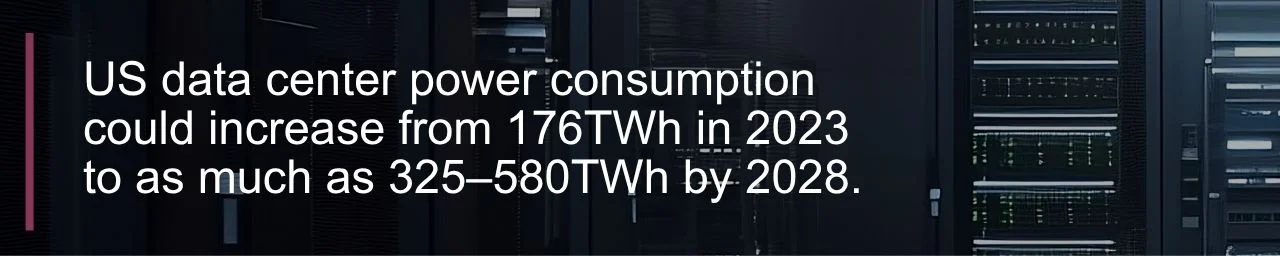
Globally, data center power consumption is projected to more than double from around 415TWh in 2024 to 945TWh by 2030, with the US accounting for around 240TWh (up 130%) of that growth. Other sources project that US data center power consumption could increase from 176TWh in 2023 to as much as 325–580TWh by 2028.
These data center energy projections vary depending on assumptions about levels of AI adoption, but the direction of travel is clear: AI data centers use more power and need more people. The problem is that meeting this demand is proving difficult. The major issue is that interconnection delays for new power projects have more than doubled over the past two decades, and nearly 2,300GW of generation and storage capacity is stuck in interconnection queues.
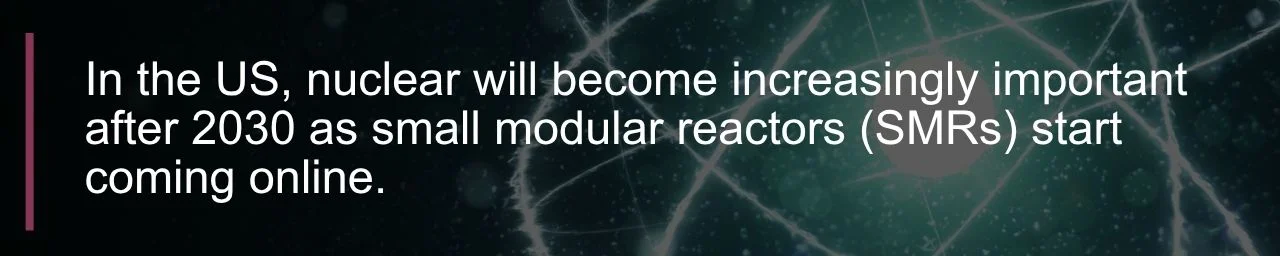
Against that backdrop, nuclear is re-emerging as a data center power solution: data centers need continuous, 24/7 baseload electricity, and most new renewable capacity cannot deliver it alone. In the short term, natural gas and coal are expected to meet over 40% of new global data center electricity demand until 2030; in the US, nuclear will become increasingly important after 2030 as small modular reactors (SMRs) start coming online.
For an industry built on uptime, firm baseload power has become as important as the silicon chips themselves.
From Credits to Contracts: A New Energy Playbook
For much of the past decade, hyperscalers met sustainability goals through renewable energy credits, and standard solar and wind power purchase agreements (PPAs). That approach worked for annual accounting but did not guarantee hourly reliability for facilities that run continuously. The shift now underway involves nuclear PPAs for existing reactor output, investment in SMRs, and funding to extend the life of operating plants.
An SMR for data center use, typically defined as producing up to 300MW, is attractive because it can be sited closer to where the electricity is needed. Some proposals go further, with “behind-the-meter” arrangements connecting a reactor directly to a campus rather than routing power through the public grid.
However, regulatory hurdles remain. For example, a proposal to expand one such arrangement at the Susquehanna nuclear plant in Pennsylvania was blocked by federal regulators over concerns around grid reliability and cost fairness.
Who Is Signing the Deals?
- Meta announced agreements in January 2026 to secure up to 6.6GW of nuclear power by 2035, combining a 20-year PPA with Vistra for existing reactor output and forward agreements with SMR developers Oklo and TerraPower.
- Microsoft signed a 20-year deal with Constellation Energy in 2024 to restart the Three Mile Island Unit 1 reactor (renamed the Crane Clean Energy Center), targeting 835MW of output in 2028.
- Google signed its first nuclear partnership with Kairos Power in October 2024, aiming for 500MW from half a dozen SMRs, and later committed early stage capital to Elementl Power for further reactor sites.
- Amazon has taken the approach of investing $500 million in X-energy’s reactor technology, signing supply agreements with Energy Northwest and Dominion Energy, and expanding its arrangement with Talen Energy at the Susquehanna plant in Pennsylvania.
- Vantage Data Centers announced a broader power partnership with Liberty Energy in January 2026 for 400MW of power generation capacity by 2027, plus future expansion potential beyond 1GW.
Once again, there’s a consistent trend: every major hyperscaler now has at least one active nuclear PPA.
Weighing the Promise Against the Uncertainty
The case for nuclear rests on reliability. Nuclear plants can run at high capacity around the clock and produce no direct carbon emissions during operation. Also, existing reactors offer a faster path to power than new-build generation. This why the Department of Energy sees nuclear, alongside geothermal, as critically important data center power solutions.
But there are concerns around the technology. SMRs have not yet been commercially deployed in the US, and data center nuclear power may not be available until the mid-2030s. On top of this, there are issues around regulatory hurdles, high upfront costs, and grid integration.
A Construction Boom Meets a Skills Gap
There’s also a major workforce challenge around data center hiring trends and skills gaps.
Every nuclear-powered data center project requires specialized labor before a single server draws power. Construction managers, project engineers, and EHS/HSE managers oversee build phases that combine two heavily regulated industries at once. Electrical instrumentation and control specialists, journeyman electricians, welders, and commissioning technicians then turn blueprints into operating infrastructure.
Skilled trades already represent the fastest-growing category of the nuclear workforce. This group represents 15–20% of operational staff, but it increases to 50–60% during new construction and 35–45% during restarts. Mechanical, Electrical, Civil/Structural, Automation, Security, and Telecomm field service, Commissioning, Quality, EHS and Project Controls disciplines are consistently in demand across both the nuclear and data center sectors.
Two Industries, One Shrinking Talent Pool
These workforce challenges aren’t unique to just the nuclear sector or data centers, either. In April 2025, the US had roughly 600,000 unfilled positions across construction and manufacturing, pushing up wages by around 20% since the pandemic. The nuclear sector is also struggling to find qualified workers in the professional and business services sector.
Demographics compound the problem. Nuclear and grid-related professions have some of the highest retirement ratios in the entire energy sector, with retirements outnumbering new entrants 1.7 to 1 in nuclear roles specifically. This is alongside an aging nuclear workforce, a shortage of qualified workers joining the industry, and a lack of training infrastructure.
For hiring managers, this means two labor-constrained industries are now competing for an ever-diminishing talent pool.
Nuclear energy recruitment and data center recruitment in the US are no longer separate conversations; they are the same one, under greater time pressure than either sector has faced before. Organizations that secure specialist engineering and construction talent early will be best positioned to keep projects on schedule
NES Fircroft: Supporting You Through This Shift
NES Fircroft works across data centers and nuclear, as well as power, renewables, engineering, construction, and life sciences. Our specialist data center recruiters most commonly fill the following roles:
- Construction Managers / Construction Oversight
- Project Managers
- Project Engineers
- Documentation Controls
- EHS/HSE Managers
- Quality Managers/Inspectors
- OFCI Installation Technicians
- Energy Marshall
- Water Marshall
- EI&C Specialists
- Commissioning
- Journeyman Electricians
- Welders
- Pipefitters
Right now, construction managers, project managers, project engineers, EHS/HSE managers, and commissioning professionals are in particularly high demand.
Developers of data center projects routinely contact us for:
- A contingent staffing partner who can mobilize temporary personnel quickly for site execution as construction phases ramp up.
- Consultancy-level support, working alongside general contractors, for end users looking for a technical partner rather than just a supplier.
- Independent oversight personnel who can represent their interests on site.
If you’re planning a nuclear-powered data center or expanding into this space, we can help you build the team it demands. Get in touch with us today to discuss your data center and nuclear energy recruitment needs.
Frequently asked questions people also ask:
What are the benefits of using SMRs for data center energy needs?
SMRs can be sited closer to the data centers and they can also be built faster than large conventional plants. Read more about the emergence of SMRs in the US.
What skills do nuclear-powered data centers need, and how can NES Fircroft help?
These projects need construction managers, project engineers, EHS/HSE managers, electricians, welders, and commissioning specialists. Learn more about current data centre hiring trends and skills demand and how we support clients with specislist workforce solutions.
What makes NES Fircroft a top choice for data center recruitment in the US?
We combine deep sector knowledge across data centers, nuclear, power, and construction, with a proven ability to source hard-to-find technical talent quickly. Explore our data centre recruitment services page for more information.