
What Employment Trends Are Shaping Europe’s Power Sector?
04 Aug, 202613:00Europe's power sector is creating strong demand for talent, but the nature of that deman...

Europe's power sector is creating strong demand for talent, but the nature of that demand is changing. Renewable energy remains the largest source of workforce growth, particularly across solar, wind and battery storage, yet hiring is increasingly focused on the infrastructure needed to connect and manage these projects. The continent also faces growing competition for specialist talent due to retirements, skills shortages, and evolving technical requirements, leading to expanded international recruitment and the drawing of talent from adjacent industries.
Key Takeaways:
- Hiring demand is expanding beyond generation projects into transmission networks, grid modernisation, interconnectors, and energy storage.
- HVDC Engineers, Power Systems Engineers, Grid Connection Managers, and BESS Specialists are some of the most sought-after professionals.
- Germany, the UK, Poland, Ireland, and the Netherlands attract strong investment and recruitment activity.
- Talent shortages, retirements/ageing workforce, skills gaps, and limited training are major obstacles for employers.
- International recruitment and contractor engagement are playing a growing role in workforce planning strategies.
Europe’s long-term goal of achieving climate neutrality by 2050 still informs investment across the power sector. Renewable energy deployment remains strong, with solar and wind expected to supply a growing share of future electricity generation. The current problem is how to connect and integrate these assets into power systems originally built for a very different energy mix and often ill-equipped to handle large volumes of renewable power.
Grid expansion, HVDC transmission, interconnectors, battery energy storage systems (BESS) and data centre infrastructure are now central to power recruitment activity across the continent. Industry forecasts suggest that the energy transition and expanding manufacturing capacity could create more than one million new jobs across Europe by 2030, with the power sector expected to require an additional 250,000 workers, meaning competition for skilled talent is unlikely to ease anytime soon.
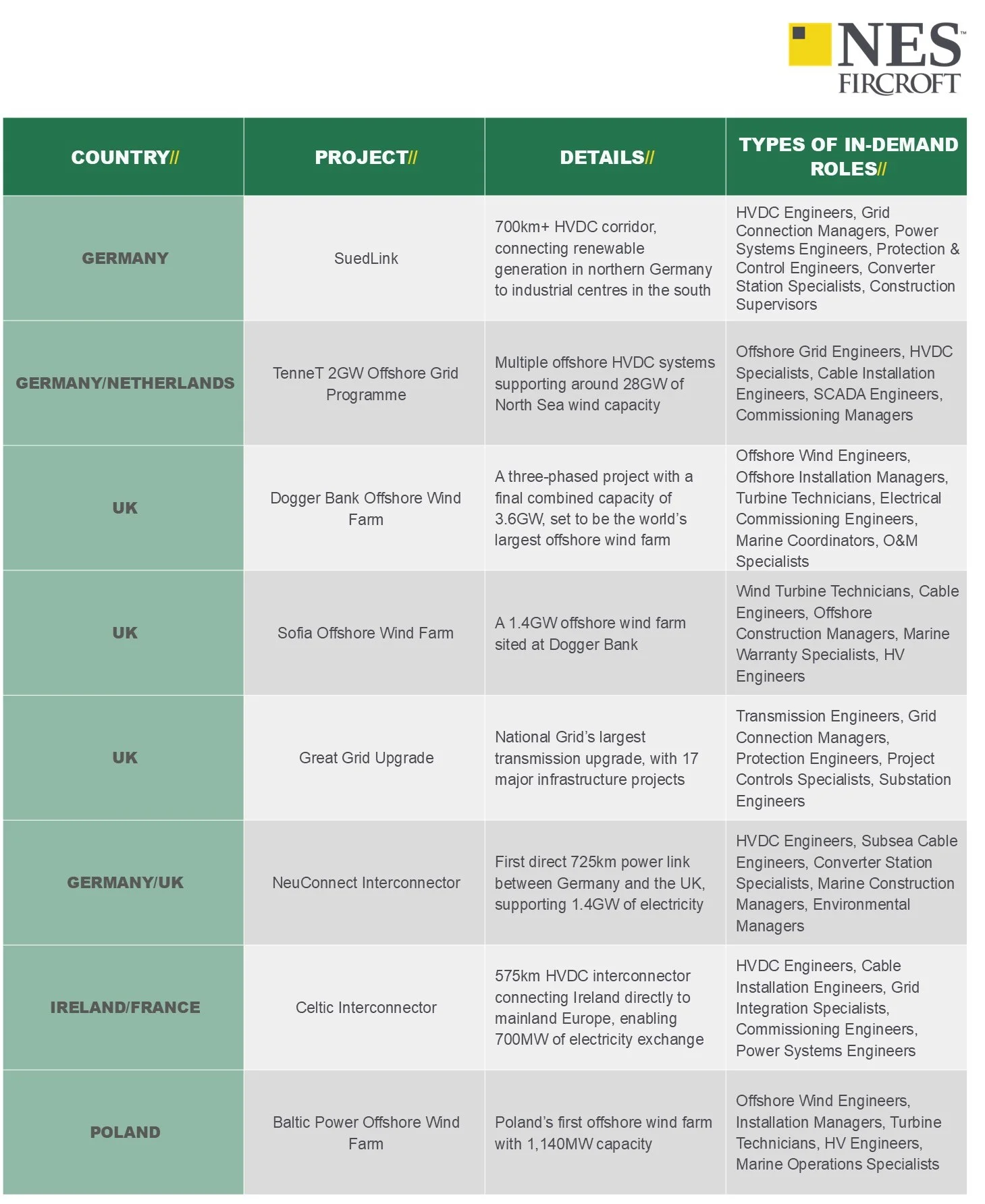
The Top Power Projects in Europe
Europe’s project pipeline gives a clear indication of where workforce demand is heading.
Renewable Energy is the Largest Source of Workforce Growth, But the Market is Maturing
1. Solar and wind
Renewable energy continues to generate more new jobs than any other area of the power sector, yet hiring priorities are evolving. As Europe's renewable fleet grows, workforce demand is shifting beyond development and construction towards operations, maintenance, asset performance and system optimisation.
This doesn’t mean renewable deployment is slowing; Europe still faces an enormous build-out challenge. To meet its climate ambitions, the European Commission estimates the EU will need around 592 GW of solar PV capacity and 510 GW of wind capacity installed by 2030, requiring annual deployment rates well above historical levels and impacting workforce demand.
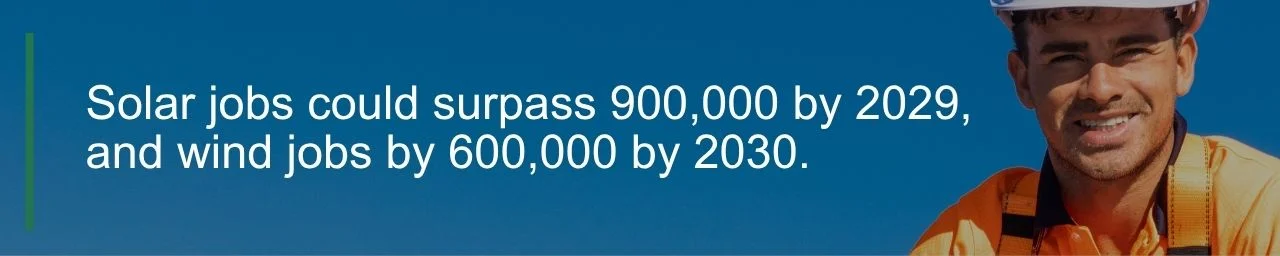
WindEurope forecasts that Europe’s wind workforce could increase from around 443,000 jobs today to more than 600,000 by 2030, with offshore wind responsible for a growing share of opportunities. Yet talent shortages remain a concern, particularly for specialist technical roles such as blade technicians, field engineers and pre-assembly specialists.
Solar also remains a major employer. The latest SolarPower EU Jobs report recorded 865,000 jobs in 2024 and projects over 900,000 by 2029, with future hiring gradually shifting towards operations and maintenance as capacity grows.
2. Battery energy storage systems (BESS)
BESS projects have become a central part of Europe’s power industry. Major activity is taking place in the UK, Germany, Italy, Spain and Ireland, where developers are investing in storage capacity to support the integration of intermittent renewable energy and grid stability.
Demand is growing for BESS engineers, battery systems engineers, energy storage specialists, grid integration engineers and SCADA professionals. Research suggests BESS will be one of Europe’s strongest recruitment themes over the next few years as project pipelines expand.
3. Data centres
Another important source of hiring comes from the proliferation of data centres in Europe, which is creating more pressure on the region’s electricity networks. The growth of AI and digital services is increasing electricity consumption forecasts across many European markets. Countries including Ireland, the Netherlands, Germany, the Nordics and the UK are seeing growing investment in facilities requiring reliable grid connections, substations, backup power systems and storage assets.
This is creating opportunities for:
- Electrical Design Engineers
- Critical Facilities Engineers
- Power Systems Engineers
- Grid Connection Managers
- Commissioning Managers
For many employers, these sectors now compete directly for the same talent pools as renewable energy and transmission projects.

Europe’s Power Sector Still Faces A Growing Talent Shortage
Despite the volume of opportunities available, attracting and retaining skilled professionals remains difficult, with labour shortages being felt across Europe and much of the energy sector.
1. Expanding population of retirees
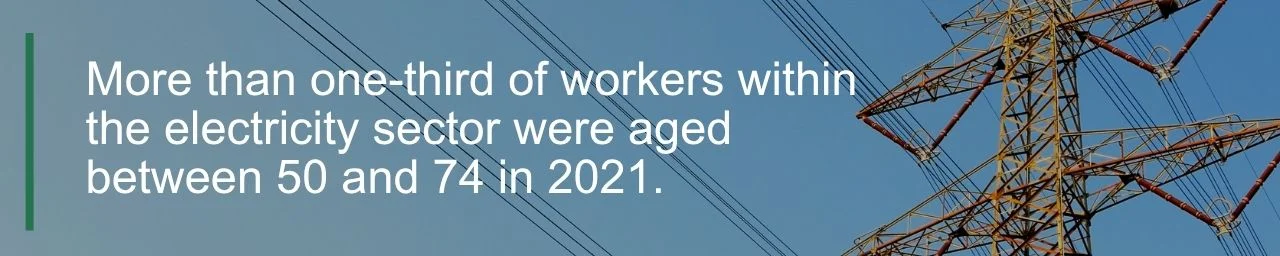
One of the largest concerns is an ageing workforce. More than one-third of workers within the electricity sector were aged between 50 and 74 in 2021. Europe’s working-age population is expected to decline steadily over the coming decades, reducing the number of new entrants available to replace experienced professionals leaving the industry. Some countries already rely on international migration to maintain workforce capacity, particularly in high-skilled engineering and technical occupations.
The International Energy Agency has also highlighted widening recruitment bottlenecks. More than half of organisations surveyed reported difficulties hiring skilled workers, while advanced economies have around 2.4 energy workers approaching retirement for every worker under 25 entering the industry.
2. Diversity is falling short
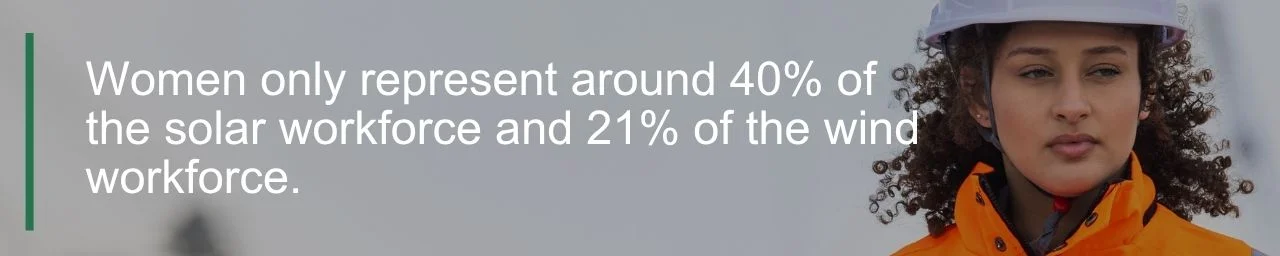
The power sector also needs to do more to engage talent pools that have historically been underrepresented. Women are underrepresented across renewable energy disciplines, accounting for around 40% of the solar workforce and approximately 21% of the wind workforce.
Improving workforce diversity will require a greater focus on job quality, career development opportunities, and inclusive work environments to make power-sector careers more attractive to a wider range of professionals.
Awareness presents another obstacle. Despite the growth of clean energy investment, many young people are unfamiliar with the skills and career paths available within the sector. In the UK, a large proportion of 16 to 24-year-olds have little understanding of what "green skills" involve, while many who have heard the term "green jobs" struggle to explain what those roles actually encompass. Improving awareness of career opportunities will be essential for building the next-generation workforce.
3. Specialist role shortages
Europe faces shortages across hundreds of specialist job profiles. Vocational and technical occupations account for many of the hardest positions to fill, underlining the importance of expanding training routes alongside graduate recruitment.
High-level engineers are some of the most in-demand and hardest to recruit for roles, but the shortage isn’t just limited to these. Electrical trades, welders, commissioning engineers, quality professionals, and experienced construction workers are all difficult to recruit across electricity networks and power infrastructure projects. In the UK alone, engineering professionals account for almost one quarter of all clean energy job advertisements, far above the national average across all sectors.
4. Technology is changing workforce requirements
Digital substations, automation, AI, advanced monitoring systems and smart-grid technologies are changing the skills required across the industry.
“Today we don’t have a technology problem. What we have is a scaling problem“, Elias Pau, Head of Operations at InnoEnergy Skills Institute.
Research from the European Commission shows that digitalisation and automation are increasing demand for upskilling across both energy supply and manufacturing. Even experienced electrical engineers and plant operators require continuous learning as technologies evolve, yet participation in workforce training remains well below European targets.
What should employers expect next?
Demand for specialised talent in Europe's power sector is expected to remain high for the foreseeable future. Renewable energy projects will continue to generate employment opportunities, but much of the hiring growth is expected to centre on the infrastructure required to connect, store and manage power across complex electricity networks.
Competition for experienced engineers, technical specialists and project professionals will remain intense. To secure the skills needed to deliver projects, employers are expanding their talent strategies beyond traditional recruitment channels. This includes engaging international talent, attracting underrepresented groups and encouraging skills transfer from adjacent industries. Professionals from sectors such as oil and gas, for example, often possess highly transferable capabilities that can be applied to offshore renewables and broader energy infrastructure projects, helping employers address immediate workforce gaps.
International recruitment is likely to become equally important in the years ahead as demographic pressures continue to tighten labour markets across Europe. Germany, for example, is projected to require a net migration of around 400,000 workers annually to maintain a stable labour force until 2060, highlighting the scale of the workforce challenge facing many European economies.
Organisations that secure specialist talent early, develop international hiring strategies, and partner with experienced workforce providers will be better positioned to meet project demands and maintain momentum as investment in Europe's power sector continues.

Looking to strengthen your power project team?
With more than 50 years of experience supporting the global energy industry, NES Fircroft helps power companies build high-performing project teams across Europe. Through continent-wide recruitment support and Employer of Record services, you can enter new European markets efficiently while maintaining full compliance with local employment regulations. Our on-the-ground experts understand the technical skills, local labour laws, and compliance requirements within Europe to keep your projects moving forward.
Get in touch with us today to discuss how we can support your hiring strategy.
People also ask:
How can power companies mobilise engineers across Europe while remaining compliant?
Deploying engineers across multiple European countries requires careful management of employment law, visas, payroll, tax and social security obligations. Many companies use an Employer of Record (EOR) partner to simplify compliance and reduce the risk of project delays when entering new markets.
What are the biggest workforce challenges facing European power projects?
Many power projects are competing for the same limited pool of engineers and technical specialists. Combined with retirements, changing skill requirements and cross-border compliance obligations, talent shortages have become a major project delivery risk across the sector.