What Are the Latest Recruitment Trends and Challenges Facing Data Centres in the Gulf?
06 Aug, 202610:33National AI plans, cloud expansion, and data localisation policies are pushing a large wave ...


National AI plans, cloud expansion, and data localisation policies are pushing a large wave of new data centre facilities across the Gulf Cooperation Council (GCC) region, especially in the two main hotspots, Saudi Arabia and the UAE. But this growth is placing greater pressure on the talent market, with skills shortages, stringent cooling requirements, grid infrastructure constraints, and hyperscale project schedules all changing how companies approach data centre recruitment in the Gulf.
Main insights:
- National AI and cloud strategies in the Gulf are backing a multi-year pipeline of hyperscale and colocation projects.
- Saudi Arabia and the UAE account for the largest share of regional development activity.
- Talent demand is moving toward specialist power, MEP, commissioning, and critical facilities roles instead of general IT staffing.
- Climate, water, grid capacity, and data localisation rules are affecting site choices and the skillsets needed to design and run facilities.
- Companies are widening talent pools through international hiring, contractor engagement, and partnerships with training providers to close skills gaps.
What’s Driving Gulf Data Centre Growth?
The GCC is being set up as a global base for cloud-led transformation. National economic diversification, sovereign AI ambitions, cloud adoption, and digital transformation investment are fuelling data centre construction projects across Saudi Arabia, the UAE, Qatar, Oman, and Bahrain.
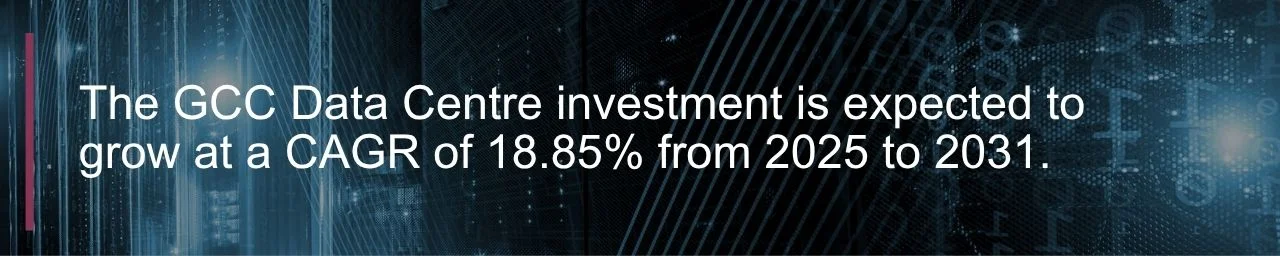
Market analysts project the GCC data centre investment to grow at a CAGR of 18.85% from 2025 to 2031, moving from $5.46bn to $15.39bn. Governments are advancing industrial plans by introducing national strategies, such as the UAE’s National AI Strategy and Saudi Arabia’s National Strategy for Data and AI. These frameworks are removing obstacles around construction and adaptation while signalling durable policy support for digital infrastructure.
Confirmed investments across the region already exceed $8bn, with around 500MW of new capacity under development. The main location is Saudi Arabia, which is expected to hold the largest share of power capacity. Saudi Arabia’s Vision 2030 agenda has placed digital infrastructure at the centre of long-term economic development, with the Public Investment Fund (PIF) announcing a $6bn programme to build one of the world’s largest data centre ecosystems, and hyperscalers including Microsoft, AWS, and Google establishing sovereign cloud services for multinational firms. The UAE is the second most popular destination, with Dubai and Abu Dhabi as the main draws, while Qatar is beginning to establish itself as another key base.
The spread of data centres is caused by a few regional advantages. Energy costs are part of the appeal, which are often 30-50% lower than the global average, alongside land availability and government incentives such as tax breaks and fast-track approvals. Data sovereignty requirements in Saudi Arabia and the UAE mandate that sensitive data be stored within national borders, creating captive demand for local hosting and steady revenue for operators.

How is AI Influencing Data Centre Development in Saudi Arabia and the UAE?
Just like the rest of the globe, AI is the most pivotal change to the build of data centres in the Gulf, and all six GCC member states have published national AI strategies as part of wider plans to diversify their economies and develop high-value technology sectors. AI forces designs towards higher rack densities, liquid cooling, and larger on-site power capacity, creating thousands of new roles compared to traditional facilities.
The AI market in the GCC isn’t set to slow down but is instead lifting public cloud spending and attracting investments from major players such as Amazon, Microsoft, Oracle, and Huawei, totalling around $10bn in the region.
In Saudi Arabia, a 36MW facility is under development in Oxagon, NEOM's industrial zone, and a 72MW facility in Riyadh, owned by HUMAIN, the AI company backed by the PIF. The Kingdom is also expanding its wider AI infrastructure through initiatives such as PIF's collaboration with Google to establish an AI hub in Dammam. Launched alongside HUMAIN, the initiative is expected to create thousands of jobs while supporting the development of Arabic LLMs. These developments form part of the National Strategy for Data and AI (NSDAI), led by SDAIA, which sets out the Kingdom's ambition to become a global AI leader by 2030.
The UAE also leads with initiatives such as G42’s Stargate project, a 5GW AI hyperscaler developed with partners including OpenAI, Nvidia, Oracle, SoftBank Group, and Cisco. Khazna Data Centres is a dominant regional provider, with industry analysis showing it controls approximately 70% of operating and under-construction capacity. Their 100MW AI facility in Ajman is the UAE’s first data centre optimised for AI and is the largest among their facilities.
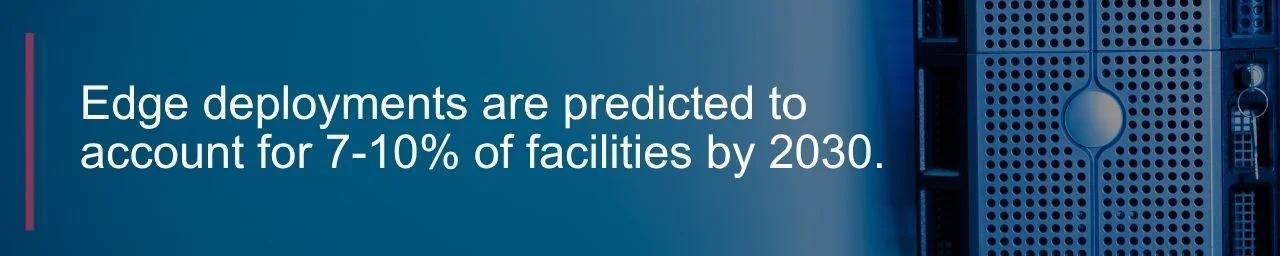
Colocation is the primary basis for GCC infrastructure, but hyperscale and edge footprints are increasing. By 2030, edge deployments are predicted to account for 7-10% of facilities, driven by smart city projects, 5G rollouts, and low-latency AI applications (ENINRAC).
What Are the Biggest Challenges Facing Data Centres in the Gulf, and How Does It Impact Recruitment?
Extreme temperatures, cooling requirements and water scarcity are the top three challenges for Gulf countries hosting data centres. Designing data centres that can handle high ambient heat and the dense thermal loads of AI requires specialist knowledge across a range of systems, including liquid cooling, district cooling, and advanced thermal management, which are skills that aren’t only not available in the local market but are also globally scarce and directly impact recruitment priorities.
Energy use and grid capacity also constrain site selection. Although the Gulf has more stable energy supplies compared to other places, the sheer volume of new AI and cloud capacity means developers also need to secure reliable power and grid interconnections. Masdar’s 5.2GW solar PV and 19GWh battery projects in Abu Dhabi are a clear example of this.
Regulatory compliance and data localisation present another challenge for companies. Operators have to follow national laws regarding data residency and cybersecurity, which influence vendor choices, operational processes, and the calibre of compliance HSE professionals need on-site.
All of these factors create a workforce profile that leans heavily on engineering and technical skills. Developers require engineers capable of designing cooling systems suited for Gulf climates. Operators need professionals familiar with mission-critical environments. Construction programmes demand experienced commissioning specialists who can validate complex systems before facilities become operational.
As projects advance, the competition for talent only intensifies. General IT staffing is no longer sufficient, and the talent pool must be able to safely deliver projects in the GCC’s more challenging climate.
Skills and Roles That Are in Demand
The surge in data centre jobs is concentrated in specialist technical and engineering roles. Many projects need specialists with backgrounds beyond IT, targeting professionals with experience in power generation, transmission, distribution, renewables, industrial facilities, and oil and gas.
Current demand is apparent for:
- Electrical and medium-voltage engineers
- Mechanical and MEP engineers
- Commissioning engineers and commissioning managers
- Critical facilities managers
- Design engineers
- Construction managers
- Project managers
- Health and safety professionals
- Building management system specialists
- Operations and maintenance personnel
- HVAC and thermal management experts
The most desirable data centre positions now bridge power and digital infrastructure. Employers value candidates who understand reliability, resilience, commissioning and operational continuity, especially those with experience in the Gulf market.

How Are Companies Addressing Data Centre Talent Shortages in the Gulf?
Developers and operators are responding to the talent shortage by widening talent pools and investing in training. Centralised Programme Management Offices (PMOs) are being set up to import global expertise while governments foster local talent through upskilling initiatives and partnerships with universities and academics.
Leading hyperscalers including AWS and Microsoft have launched training programmes intended to build local talent capability across cloud and digital infrastructure disciplines. And governments are investing in education and research; institutions such as KAUST in Saudi Arabia and the Mohamed bin Zayed University of Artificial Intelligence in the UAE, both of which contribute to developing future technology talent, though this will take time.
Many organisations are broadening their candidate pools and recruiting professionals from adjacent energy sectors. Engineers from these environments often bring transferable experience in high-voltage systems, reliability, safety-critical operations and complex project delivery, making them well-suited to data centre environments.
International recruitment and contractor engagement are other common approaches, with employers working with specialist recruitment agencies to plug capability gaps during key design, construction, commissioning, or operations phases. Recruitment activity should now begin months before construction starts, to secure specialist talent early and reduce the risk of programme delays in a highly competitive market.

NES Fircroft: Supporting Data Centre Projects in the Middle East
NES Fircroft brings 15+ years of experience partnering with developers, EPCs, utilities, operators, and hyperscalers across the Middle East and globally. Our regional teams have expertise in conventional generation, renewables, transmission & distribution, grid modernisation, energy storage and mission-critical data centre developments, making us the ideal recruitment partner.
Through our local offices, our teams can map your workforce needs, mobilise the right profiles and support delivery across Saudi Arabia, the UAE, and the wider region.
Contact us today to discuss your data centre staffing requirements.